Monday 26th March 2012 Commission (Hand In)
Not much to say here other than the fact I provided the images and powerpoint as required (around 11:00) and then had a very long wait until the 16:30 Session to discuss groups. This time was spent looking through charity shops in Chatham and Rochester with the rest of group one. I quickly popped into the Salvation Army to finally drop some long overdue prints in from my earlier 'body' project.
We purchased a could of 1960's envelopes with period stamps, Amie purchased a small travel alarm clock and we looked for inspiration with regards the costumes.
Commission Project
At 16:30 we got to view all the Commission work from everybody with a view to looking for photographers to collaborate with regards the second part of the project. Looking at all the other projects it was obvious I was the only Individual who'd photographed bunkers/pillboxes (unsurprisingly)! Only one other student had a military theme that related to waste (which related to individuals) so finding a full group of 5-6 individuals with whom my work comfortably sits could be difficult! I was approached by some individuals who have looked at dereliction and this may end up providing a way forward, I'll have to give the whole team aspect some more consideration. I'd have been far happier if the images had been printed and posted on poly boards much earlier in the day, giving us time to compare and discuss the options, before moving the images into groups.
I feel like I hung around all day just to see something that could have been posted online since we all sat in silence to view the work, and I had to leave as soon as it was over.
Once again I tried to scan my negatives for Steffi and once again the neg scanners were all busy, so another frustration! I'll keep on trying!
Monday, 26 March 2012

Sunday, 25 March 2012
Free Day Sunday 25th March 2012 The Commission Critical Appraisal
Abandoned bunkers in the countryside, the silent witnesses of war.
An Exhibition
 |
| Final images |


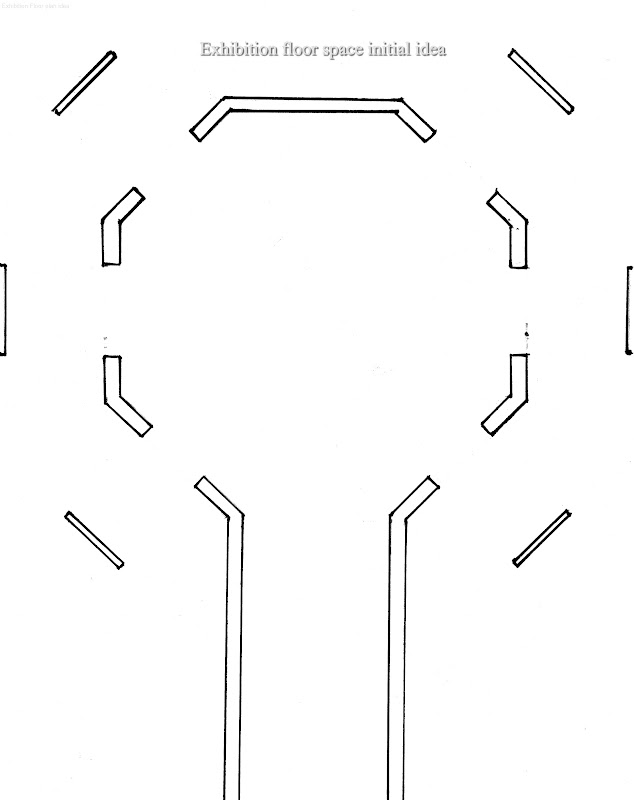 |
| Exhibition Layout |
The starting point for this project was a close examination of the brief, and the key words “produced in the local Medway area” I initially started to physically search the local area and the internet simultaneously for background information, not wanting to firm up an idea until I understood the area more. This led to some research on local military waste as an area of interest, which started off with a WW1 Submarine hulk in the Medway in the Hoo area, which in turn lead to further research on that specific area. I knew the sub wreck was impossible to photograph without a boat, but several forts in the area were accessible. At this time (15th February) we were paired up randomly and I got Edvardas Poska who was tasked by myself to look at “military detritus and abandoned forts and facilities” as my research partner. I noted Medway’s industrial history and its military history and took some further test shots on these areas of interest. By chance Edvardius’s previous Environment project turned out to be on military facilities (mostly on the South Coast), so his research was outstanding and pointed me in the direction of the work of Paul Virilio, English photography Jonathan Andrew and Erasmus Schroter.
So I looked inland and started to research Cliff fort and the Isle of Grain tower and dummy battery. A field trip to the Grain area lead me to recall my childhood experiences of WWII bunkers in the area, and I soon decided upon them as the subject matter for my project.
I was advised to look at Jane and Louise Wilsons ‘Sealender’, Erasmus Schroter bunker images and Tacita Deans ‘Sound Mirrors’ (and Jonathan Andrew also via Edvardas research).
 |
| Jane and Louise Wilsons ‘Sealender’ |
 |
| Jane and Louise Wilsons ‘Sealender’ |
 |
| Erasmus Schroter |
 |
| Tacita Deans ‘Sound Mirrors’. |
 |
| Jonathan Andrew http://www.jonathanandrewphotography.com/#mi=2&pt=1&pi=10000&s=0&p=1&a=0&at=0 |
 |
| Jonathan Andrew http://www.jonathanandrewphotography.com/#mi=2&pt=1&pi=10000&s=0&p=1&a=0&at=0 |
I have also independently researched John Becks writing of Bunkers (http://culturalpolitics.dukejournals.org/content/7/1/79.full) (John Beck teaches modern literature at Newcastle University).
I looked at the work Uta Kögelsberger who has photographed German bunkers build in WWII http://www.utakogelsberger.com/work/bunker/index.htm
 |
| Uta Kögelsberger |
 |
| Uta Kögelsberger |
Also I viewed the work of Magdalena Jetelová who also photographs German bunkers from WWII, but who produces B&W images with text across the actual structures. http://www.jetelova.de/projects/atlanticwall/modul.html
 |
| Magdalena Jetelová |
 |
| Magdalena Jetelová |
Technical information relating to type and use of the facilities came from The book on Pillboxes I acquired.
My method of delivery will be an exhibition with the concept being thus; Galley space which you enter the door that leads to an enclosed corridor that replicates a concrete corridor. This takes you into a confined space with gravel on the floor (bunkers in the UK frequently have no concrete floors). This internal space would represent the inside of a decaying bunker complete with vision slits through which you would view the work. I have selected six images to enable the even spacing of the vision slits, the images would be very large (so the viewer is required to . The space would be dark and confined the images would be lit and mounted facing the slit. The viewer would engage with the experience of abandonment, the act of viewing the structures from an unfamiliar point of view. Engaging in the act of observation via the vision/gun slit and seeing the countryside as a space which has been marked by the threat of conflict, highlighting issues on heritage, conflict and waste, and the traces that still remain from this global conflict on our local environment. With regards references I took a more subtle and soft approach to shooting the structures, most (but not all) of the references concentrate on the mammoth imposing German bunkers on mainland Europe. The British structures are much smaller and I shot both close up and images further away, the latter seemed to work better at expressing the way these structures slowly slip into obscurity. This decision was an editorial one after the shoots and if it had been made up front I would have found the project easier in regards to artistic direction. Also the method of delivery to the audience wasn't decided fully until after the Lectures that related to this area of the project, had I been 100% sure of my delivery technique I suspect this would have made the image making process easier.
Dear All, posted previously and as a polite reminder for the Commission Unit, please hand-in the following, to the Faculty Office, Rm 401 on the ground floor, between 11am and 1pm.
The deliverables are as follows:
1. Your set of IMAGES, a minimum of 3 Prints. Please ensure the work is handed in either a print-box, or hard backed envelope. Do clearly labelled with your full name. Task Complete
2. A PowerPoint on a labelled, CDR with the following the guidelines: Task Complete
- Project Title & Name
- Preferred Output option: Newspaper, Fashion Publication, Exhibition
- Concept (The outline must be no more than 3 sentences)
- The images must be scanned in and be no larger than 1Mb each. Using Photoshop open the image. Go to ‘Image Size’ in the ‘Image’ menu and in the ‘Document Size’ boxes, changed the ‘Height’ to 7″ (inches). Change the resolution to no more than 96dpi. Then import the images into PowerPoint.
Dear All, posted previously and as a polite reminder for the Commission Unit, please hand-in the following, to the Faculty Office, Rm 401 on the ground floor, between 11am and 1pm.
The deliverables are as follows:
1. Your set of IMAGES, a minimum of 3 Prints. Please ensure the work is handed in either a print-box, or hard backed envelope. Do clearly labelled with your full name. Task Complete
2. A PowerPoint on a labelled, CDR with the following the guidelines: Task Complete
- Project Title & Name
- Preferred Output option: Newspaper, Fashion Publication, Exhibition
- Concept (The outline must be no more than 3 sentences)
- The images must be scanned in and be no larger than 1Mb each. Using Photoshop open the image. Go to ‘Image Size’ in the ‘Image’ menu and in the ‘Document Size’ boxes, changed the ‘Height’ to 7″ (inches). Change the resolution to no more than 96dpi. Then import the images into PowerPoint.
Saturday, 24 March 2012
Free Day Saturday 24th March 2012 Darkroom Project
Saturday 24th March 2012 Darkroom Project
Managed to finally get some time working back on this project today!
Managed to finally get some time working back on this project today!
 |
| Ceiling painted! |
 |
| Started on the rest of the wood. |
Friday, 23 March 2012
Day 78 Friday 23rd March 2012 Fashion Constructed Image 'Mock Set Build'
Friday 23rd March 2012 Fashion Constructed Image 'Mock Set Build'
I got in early hoping to speak to someone about scanning negatives but ended up doing a few prints I'd been meaning to do for some time. Sacha was also printing due to Mondays Commission deadline so I suspect the scanning will have to wait until next week!
As I was in early myself and the team set up early for the mock build. Colin and Steve assisted and Jonathan and Sam Chick also checked out the set and contributed with advice.
We ended up taking up the whole of studio two and used a focal length of approximately 90mm to give us the desired effect we wanted. Whilst placing models we tried not only the positions we have in our narrative/sketches but some alternates. Overall the exercise was a great success and the team took dimensions from the set when we were happy. Camera height, set dimensions and focal length along with positions for the models were all noted.
JS has also mailed an image for lighting reference by Sebastian Faena 'China Girl'
I got in early hoping to speak to someone about scanning negatives but ended up doing a few prints I'd been meaning to do for some time. Sacha was also printing due to Mondays Commission deadline so I suspect the scanning will have to wait until next week!
As I was in early myself and the team set up early for the mock build. Colin and Steve assisted and Jonathan and Sam Chick also checked out the set and contributed with advice.
We ended up taking up the whole of studio two and used a focal length of approximately 90mm to give us the desired effect we wanted. Whilst placing models we tried not only the positions we have in our narrative/sketches but some alternates. Overall the exercise was a great success and the team took dimensions from the set when we were happy. Camera height, set dimensions and focal length along with positions for the models were all noted.
 |
| Model (image taken at high angle although this does not reflect the actual camera angle we plan to use) |
 |
| The teams props list (all numbered) |
 |
| Google sketch images created by the team to show to Mike the set build adviser |
 |
| The room as we image it would look in reality (not in set format) |
 |
| Team 1 |
 |
| Team 1 |
 |
| Team 1 |
 |
| Team 1 |
 |
| Team 1 Basic mock-up |
 |
| Experimenting with lenses (in this case a zoom) to get correct focal length |
 |
| Depth of set |
 |
| Flats, here showing we did not need a ceiling |
 |
| Mock up window |
 |
| Experiments with model positions |
 |
| Experiments with model positions |
 |
| Experiments with model positions |
JS has also mailed an image for lighting reference by Sebastian Faena 'China Girl'
.JPG) |
| Sebastian Faena - China Girl |
Thursday, 22 March 2012
Free Day Thursday 22nd March 2012 The Commission (Printing)
Thursday 22nd March 2012 The Commission (Printing)
From 12:00 I continued to print various images for the commission project. I spent about four and a half hours printing and printed everything I wanted except for one image (which had a small mark and some dust I couldn't remove), this was very frustrating and I ended up wasting paper and time on trying to remedy the issue. It was especially frustrating as Steffi has selected it as one of four images she wanted me to print. Due to the time spent on this last print i was unable to get the negatives scanned by John so i'll get the scanning done tomorrow.


(Research below from the following source) http://culturalpolitics.dukejournals.org/content/7/1/79.full
While the bunker promises security and control in the form of refuge it is also a sign of the deadly power that requires reinforced shelter; a bunker is both womb- and tomb-like, generating precisely the kind of attraction/repulsion ambivalence Freud discusses in Totem and Taboo as the characteristic polarity of modern affective life (Freud 1919). Zygmunt Bauman explains that ambivalence refers to “the possibility of assigning an object or an event to more than one category” (1991: 1). As a failure of language's naming function, ambivalence generates, according to Bauman, “acute discomfort” (1) when situations, objects, or actions cannot be accurately or adequately assigned an unambiguous meaning. Modernity's pursuit of order has therefore been a protracted war on ambivalence, yet the classification systems that have sought to reduce chaos by fragmenting and regulating the world have in fact only served to generate more ambivalence. For Bauman, “ambivalence is the waste of modernity” and modernity's “most genuine worry and concern, since unlike other enemies, defeated or enslaved, it grows in strength with every success of modern powers. It is its own failure that the tidying-up activity construes as ambivalence” (15; italics in original).
As a sign of modern industrial warfare, the bunker embodies violence either achieved or promised. But, as we have seen, a visible bunker is to a large extent disarmed, though its military function is overwritten by its uncanny affective power as something hidden that has come to light. The control of the environment the bunker's presence was supposed to ensure – the war machine's capacity to secure and hold territory; to produce order from chaos and thereby reduce ambivalence – is, postwar, apparently no longer relevant. And yet as Macfarlane suggests, the bunker maintains a hold on its environment that cannot properly return to a state of peace but must forever be informed by its militarized condition. The bunker's capacity to generate discomfort of the kind registered by Sebald and Macfarlane is complicated and troublesome; indeed, as Bauman suggests, any attempt to grasp or secure the bunker's significance is likely to produce more ambivalence and contradiction. The bunker as such is disruptively anomalous and defies categorization and stability of function and significance. Oscillating somewhere between the visible and the invisible, architecture and engineering, ruins and rubble, violence and inertia, the spectacularly symbolic and the blankly dumb, the bunker is the waste of modernity that cannot be tidied away.
From 12:00 I continued to print various images for the commission project. I spent about four and a half hours printing and printed everything I wanted except for one image (which had a small mark and some dust I couldn't remove), this was very frustrating and I ended up wasting paper and time on trying to remedy the issue. It was especially frustrating as Steffi has selected it as one of four images she wanted me to print. Due to the time spent on this last print i was unable to get the negatives scanned by John so i'll get the scanning done tomorrow.


(Research below from the following source) http://culturalpolitics.dukejournals.org/content/7/1/79.full
While the bunker promises security and control in the form of refuge it is also a sign of the deadly power that requires reinforced shelter; a bunker is both womb- and tomb-like, generating precisely the kind of attraction/repulsion ambivalence Freud discusses in Totem and Taboo as the characteristic polarity of modern affective life (Freud 1919). Zygmunt Bauman explains that ambivalence refers to “the possibility of assigning an object or an event to more than one category” (1991: 1). As a failure of language's naming function, ambivalence generates, according to Bauman, “acute discomfort” (1) when situations, objects, or actions cannot be accurately or adequately assigned an unambiguous meaning. Modernity's pursuit of order has therefore been a protracted war on ambivalence, yet the classification systems that have sought to reduce chaos by fragmenting and regulating the world have in fact only served to generate more ambivalence. For Bauman, “ambivalence is the waste of modernity” and modernity's “most genuine worry and concern, since unlike other enemies, defeated or enslaved, it grows in strength with every success of modern powers. It is its own failure that the tidying-up activity construes as ambivalence” (15; italics in original).
As a sign of modern industrial warfare, the bunker embodies violence either achieved or promised. But, as we have seen, a visible bunker is to a large extent disarmed, though its military function is overwritten by its uncanny affective power as something hidden that has come to light. The control of the environment the bunker's presence was supposed to ensure – the war machine's capacity to secure and hold territory; to produce order from chaos and thereby reduce ambivalence – is, postwar, apparently no longer relevant. And yet as Macfarlane suggests, the bunker maintains a hold on its environment that cannot properly return to a state of peace but must forever be informed by its militarized condition. The bunker's capacity to generate discomfort of the kind registered by Sebald and Macfarlane is complicated and troublesome; indeed, as Bauman suggests, any attempt to grasp or secure the bunker's significance is likely to produce more ambivalence and contradiction. The bunker as such is disruptively anomalous and defies categorization and stability of function and significance. Oscillating somewhere between the visible and the invisible, architecture and engineering, ruins and rubble, violence and inertia, the spectacularly symbolic and the blankly dumb, the bunker is the waste of modernity that cannot be tidied away.
 |
| This print still needs some attention |
Wednesday, 21 March 2012
Free Day Wednesday 21st March 2012 Fashion Constructed Image
Wednesday 21st March 2012 Fashion Constructed Image
Today the 1960's spy camera arrived which is great!


I've also spoken to Colin who's approved the Risk Assessment form for the project without alteration, again pleasing!
With regards to Fridays 'Mock Build' workshop Colin has mentioned we might be able to start as early as 13:00 (instead of 14:00) which gives us some extra breathing space. I'll see if anyone in the group wants to start earlier..
Today the 1960's spy camera arrived which is great!

 |
| http://en.wikipedia.org/wiki/Minolta_16 |

I've also spoken to Colin who's approved the Risk Assessment form for the project without alteration, again pleasing!
With regards to Fridays 'Mock Build' workshop Colin has mentioned we might be able to start as early as 13:00 (instead of 14:00) which gives us some extra breathing space. I'll see if anyone in the group wants to start earlier..
Free Day Wednesday 21st March 2012 The Commission (printing)
Wednesday 21st March 2012 The Commission (printing)
I have printed three images of bunkers for this project that are quite close up. These were printed in the workshop with Colin, and at the same time I printed an image showing much more space and countryside surrounding one of the bunkers. For editorial reasons I've decided to print further negatives from the same shoot, basically I want more images to choose from.
I was set up and starting printing by 12:00 in a busy darkroom (due to a colour printing workshop that was also running). Thankfully the B&W darkroom had free enlargers so I was able to progress my printing. Steffi kindly reviewed my negatives and suggested those she preferred, so I've decided to continue printing tomorrow as well so that I can complete all the images that were selected. I also need to work with John (technician) tomorrow as four of my images are to be scanned (along with other students work, to be hung). I've wanted to see more first year work on the walls so this will be a great opportunity to get some of our work up! I'll blog the prints and wedge/test strips etc after I have completed the series.
After packing up I left uni to collect a friend and then returned to check out the MA exhibition in studio three as I was very interested to see the work and the exhibition layout.
Bunkers used to exhibit (or store) art (see below)
http://www.spiegel.de/international/zeitgeist/0,1518,549487,00.html
http://www.bbc.co.uk/news/uk-england-devon-12705729
http://www.bbc.co.uk/news/world-europe-13843247
http://www.museums.nuremberg.de/art-shelter/index.html
Commission requirements
To support the submission of Task 1, the project deadline is extended from 14th March, to MONDAY 26th MARCH. Please hand-in the following, to the Faculty Office, Rm 401 on the ground floor, between 11am and 1pm.
The deliverables are as follows:
Your set of IMAGES, a minimum of 3 Prints. Please ensure the work is handed in either a print-box, or hard backed envelope. Do clearly labelled with your full name.
A PowerPoint following the guidelines:
Project Title
Preferred Output option: Newspaper, Fashion Publication, Exhibition
Concept (The outline must be no more than 3 sentences)
The images must be scanned in and be no larger than 1Mb each. Using Photoshop open the image. Go to ‘Image Size’ in the ‘Image’ menu and in the ‘Document Size’ boxes, changed the ‘Height’ to 7″ (inches). Change the resolution to no more than 96dpi.
BLOG ENTRY - Please ensure that a, 300 word critical appraisal, is posted to your Blog with the following structure:
A clear introduction to your project, outlining the concept (idea).
Include your Research and Visual References, with a clear explanation of what you think their significance is and why. For example, how does your reference relate to your project? What do you think are the most important factors that you have learnt from your reference?
Scanned Contact Sheets, highlighting your editorial choice and the reasons behind your selection. Here we can discuss matters of camera position, focal length, exposure and lighting, etc.
Your Photographic Images
Finally include a Self Evaluation - Write a self-evaluation that covers these questions.
What is your understanding of issues related to the issues of Waste
What context would you place your work in? (Newspaper/Exhibition/Fashion Journal)
What were the reasons behind your photographic choices? For instance, how do you think your visual choices translate to your ideas?
How have you managed your studies?
What aspect of your shoot productions do you need to reflect upon and why?
What has been the most significant challenge on the Project so far? – How can you overcome them in the future?
EDITORIAL ‘PUBLISHING’ GROUPS: Monday 26th March, 4.30pm
You are asked to produce a ‘mock’ publication. The choice of which is yours, whether this be Exhibition, Newspaper, Fashion Journal etc.
Form 11 Editorial Groups of five/six members, but give careful consideration to the choice of photography and how the works relate to one another to form a possible narrative about the subject of waste. Discuss also the best publishing context for the photography.
Go through the presentation, which we will present and select 5 to 6 submissions that you believe would be most suitable to form an editorial collaboration. Negotiate with your fellow peers and agree an output publication.
Submit by email your Group members, along with the ‘output’ proposal to Jonathan by the close of the day.
PINHOLE SUBMISSION DEADLINE: Friday, 20TH April
Please hand-in your print for the ‘pinhole’ component of the Commission Unit , to the Faculty Office, Rm 401 on the ground floor, between 11am and 1pm.
Ensure the work is handed in either a print-box, or hard backed envelope. Do clearly labelled with your full name.
I have printed three images of bunkers for this project that are quite close up. These were printed in the workshop with Colin, and at the same time I printed an image showing much more space and countryside surrounding one of the bunkers. For editorial reasons I've decided to print further negatives from the same shoot, basically I want more images to choose from.
I was set up and starting printing by 12:00 in a busy darkroom (due to a colour printing workshop that was also running). Thankfully the B&W darkroom had free enlargers so I was able to progress my printing. Steffi kindly reviewed my negatives and suggested those she preferred, so I've decided to continue printing tomorrow as well so that I can complete all the images that were selected. I also need to work with John (technician) tomorrow as four of my images are to be scanned (along with other students work, to be hung). I've wanted to see more first year work on the walls so this will be a great opportunity to get some of our work up! I'll blog the prints and wedge/test strips etc after I have completed the series.
After packing up I left uni to collect a friend and then returned to check out the MA exhibition in studio three as I was very interested to see the work and the exhibition layout.
Bunkers used to exhibit (or store) art (see below)
http://www.spiegel.de/international/zeitgeist/0,1518,549487,00.html
http://www.bbc.co.uk/news/uk-england-devon-12705729
http://www.bbc.co.uk/news/world-europe-13843247
http://www.museums.nuremberg.de/art-shelter/index.html
Commission requirements
To support the submission of Task 1, the project deadline is extended from 14th March, to MONDAY 26th MARCH. Please hand-in the following, to the Faculty Office, Rm 401 on the ground floor, between 11am and 1pm.
The deliverables are as follows:
Your set of IMAGES, a minimum of 3 Prints. Please ensure the work is handed in either a print-box, or hard backed envelope. Do clearly labelled with your full name.
A PowerPoint following the guidelines:
Project Title
Preferred Output option: Newspaper, Fashion Publication, Exhibition
Concept (The outline must be no more than 3 sentences)
The images must be scanned in and be no larger than 1Mb each. Using Photoshop open the image. Go to ‘Image Size’ in the ‘Image’ menu and in the ‘Document Size’ boxes, changed the ‘Height’ to 7″ (inches). Change the resolution to no more than 96dpi.
BLOG ENTRY - Please ensure that a, 300 word critical appraisal, is posted to your Blog with the following structure:
A clear introduction to your project, outlining the concept (idea).
Include your Research and Visual References, with a clear explanation of what you think their significance is and why. For example, how does your reference relate to your project? What do you think are the most important factors that you have learnt from your reference?
Scanned Contact Sheets, highlighting your editorial choice and the reasons behind your selection. Here we can discuss matters of camera position, focal length, exposure and lighting, etc.
Your Photographic Images
Finally include a Self Evaluation - Write a self-evaluation that covers these questions.
What is your understanding of issues related to the issues of Waste
What context would you place your work in? (Newspaper/Exhibition/Fashion Journal)
What were the reasons behind your photographic choices? For instance, how do you think your visual choices translate to your ideas?
How have you managed your studies?
What aspect of your shoot productions do you need to reflect upon and why?
What has been the most significant challenge on the Project so far? – How can you overcome them in the future?
EDITORIAL ‘PUBLISHING’ GROUPS: Monday 26th March, 4.30pm
You are asked to produce a ‘mock’ publication. The choice of which is yours, whether this be Exhibition, Newspaper, Fashion Journal etc.
Form 11 Editorial Groups of five/six members, but give careful consideration to the choice of photography and how the works relate to one another to form a possible narrative about the subject of waste. Discuss also the best publishing context for the photography.
Go through the presentation, which we will present and select 5 to 6 submissions that you believe would be most suitable to form an editorial collaboration. Negotiate with your fellow peers and agree an output publication.
Submit by email your Group members, along with the ‘output’ proposal to Jonathan by the close of the day.
PINHOLE SUBMISSION DEADLINE: Friday, 20TH April
Please hand-in your print for the ‘pinhole’ component of the Commission Unit , to the Faculty Office, Rm 401 on the ground floor, between 11am and 1pm.
Ensure the work is handed in either a print-box, or hard backed envelope. Do clearly labelled with your full name.
Subscribe to:
Posts (Atom)